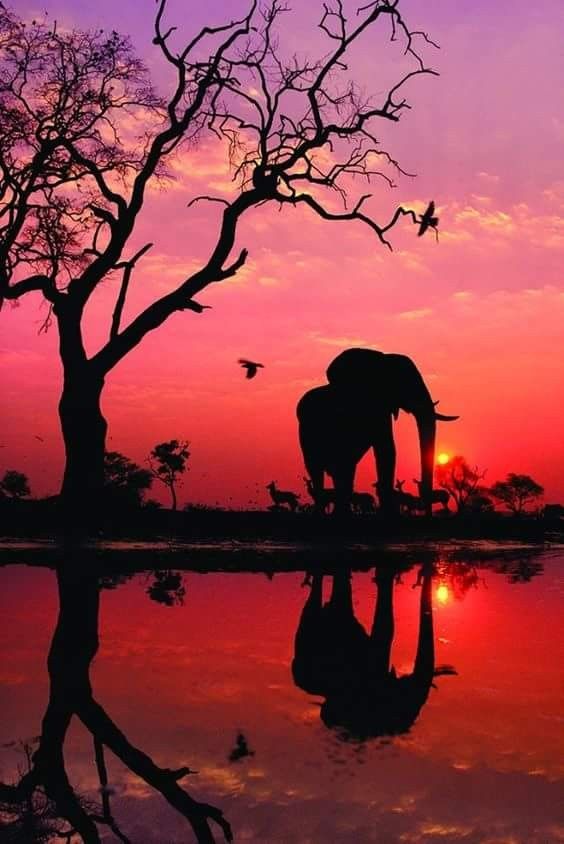
Before this writing assignment, I knew little about wildlife and why wildlife would be so important to us.
Still, I have learned that nature is essential to us, and we should do everything we can to preserve wildlife by protecting those so cold, uncontrollable wild animals that most people consider very dangerous to be a part of this world.
We should do what we can to protect the animals that are part of the wildlife, keep them safe from people they like to hunt, and not learn about their environment or what makes them such dangerous animals.
No animals are too risky as long as you know how they live and survive in the wild. We fear the world because we don’t want to learn about the environment or who we are as animals.
Animals deserve to have a life just like humans have lives. They have lives and deserve to live them, whether wild or not; they deserve a place for themselves, so others can’t harm them, and they can hurt others.
Wildlife refers to undomesticated animal species but has come to include all organisms that grow or live wild in an area without being introduced by humans.
Nature was also synonymous with the game: those birds and mammals hunted for sport.
Nature can be found in all ecosystems. Deserts, plains, grasslands, woodlands, forests, and other areas, including the most developed urban sites, all have distinct forms of wildlife.
While the term in popular culture usually refers to animals that are untouched by human factors, most scientists agree that much wildlife is affected by human activities.
Some nature threatens human safety, health, property, and quality of life. However, many wild animals, even the dangerous ones, have value to human beings. This value might be economic, educational, or emotional.
Humans have historically tended to separate civilization from wildlife in several ways, including the legal, social, and moral senses. Some animals, however, have adapted to suburban environments.
This includes feral cats, dogs, mice, and rats. Some religions declare certain animals sacred, and in modern times, concern for the natural environment has provoked activists to protest against the exploitation of wildlife for human benefit or entertainment.
Global wildlife populations have decreased by 68% since 1970 as a result of human activity, particularly overconsumption, population growth, and intensive farming, according to the 2020 World Wildlife Fund’s Living Planet Report and the Zoological Society of London’s Living Planet Index measure, which is further evidence that humans have unleashed a sixth mass extinction event.
According to CITES, it has been estimated that the international wildlife trade annually amounts to billions of dollars and affects hundreds of millions of animal and plant specimens.
Wildlife trade refers to products derived from non-domesticated animals or plants, usually extracted from their natural environment or raised under controlled conditions.
It can involve trading living or dead individuals, tissues such as skins, bones or meat, or other products. Legal wildlife trade is regulated by the United Nations Convention on International Trade in Endangered Species of Wild Fauna and Flora (CITES), which currently has 184 member countries called Parties.
Illegal wildlife trade is widespread and constitutes one of the significant illegal economic activities comparable to the traffic of drugs and weapons.
Wildlife trade is a serious conservation problem, hurts the viability of many wildlife populations, and is one of the significant threats to the survival of vertebrate species.
The illegal wildlife trade has been linked to the emergence and spread of new infectious diseases in humans, including emergent viruses. Global initiatives like the United Nations Sustainable Development Goal 15 aim to end the illegal supply of wildlife.
Stone Age people and hunter-gatherers relied on wildlife, plants, and animals for food. Some species may have been hunted to extinction by early human hunters. Hunting, fishing, and gathering wildlife is still a significant food source in some parts of the world.
Hunting and non-commercial fishing are mainly seen as a sport or recreation in other areas. Meat sourced from wildlife not traditionally regarded as game is known as bushmeat.
The increasing demand for wildlife as a source of traditional food in East Asia is decimating populations of sharks, primates, pangolins, and other animals, which they believe have aphrodisiac properties.
Malaysia is home to a vast array of fantastic wildlife. However, illegal hunting and trade threaten Malaysia’s natural diversity.
— Chris S. Shepherd
A November 2008 report from biologist and author Sally Kneidel, Ph.D., documented numerous wildlife species for sale in informal markets along the Amazon River, including wild-caught marmosets sold for as little as $1.60 (5 Peruvian soles).[self-published source?] Many Amazon species, including peccaries, agoutis, turtles, turtle eggs, anacondas, and armadillos, are sold primarily as food.
Wildlife has long been a common subject for educational television shows. National Geographic Society specials appeared on CBS since 1965, later moving to American Broadcasting Company and Public Broadcasting Service.
In 1963, NBC debuted Wild Kingdom, a popular program featuring zoologist Marlin Perkins as host. The BBC Natural History unit in the United Kingdom was a similar pioneer, the first wildlife series, LOOK, presented by Sir Peter Scott, was a studio-based show with filmed inserts.
David Attenborough first made his appearance in this series, which was followed by the series Zoo Quest during which he and cameraman Charles Lagus went to many exotic places looking for and filming elusive wildlife—notably the Komodo dragon in Indonesia and lemurs in Madagascar.
Since 1984, the Discovery Channel and its spinoff Animal Planet in the US have dominated the market for shows about wildlife on cable television, while on Public Broadcasting Service, the NATURE strand made by WNET-13 in New York and NOVA by WGBH in Boston are notable.
Wildlife television is now a multimillion-dollar industry with specialist documentary filmmakers in many countries, including the UK, the US, New Zealand, Australia, Austria, Germany, Japan, and Canada.[citation needed] Many magazines and websites cover wildlife, including National Wildlife Magazine, Birds & Blooms, Birding (magazine), wildlife.net, and Ranger Rick for children.
Wildlife tourism is an element of many nations’ travel industries centered around observation and interaction with local animal and plant life in their natural habitats.
While it can include eco- and animal-friendly tourism, safari hunting and similar high-intervention activities also fall under the umbrella of wildlife tourism.
In its simplest sense, wildlife tourism is interacting with wild animals in their natural habitat, actively (e.g., hunting/collection) or passively (e.g., watching/photography).
Wildlife tourism is an integral part of the tourism industry in many countries, including many African and South American countries, Australia, India, Canada, Indonesia, Bangladesh, Malaysia, Sri Lanka, and Maldives, among many others.
It has experienced dramatic and rapid growth in recent years worldwide, and many elements are closely aligned with eco-tourism and sustainable tourism.
According to United Nations World Tourism Organization, with an annual growth of about 3%, 7% of the world tourism industry relates to wildlife tourism. They also estimate that the change is much higher in places like UNESCO World Heritage Sites.
Wildlife tourism employs 22 million people worldwide, directly or indirectly, and contributes more than $ 120 billion to global GDP. As a multimillion-dollar international industry, wildlife tourism is often characterized by offering customized tour packages and safaris to allow close access to wildlife.
Ms. Butterfly Genesis
 mabelcreativity.blog
Leave a comment